Tús Maith, Leath na hOibre
irish for beginners
10 week online course
every Tuesday at 7pm bst
start date: 26yh May 2026
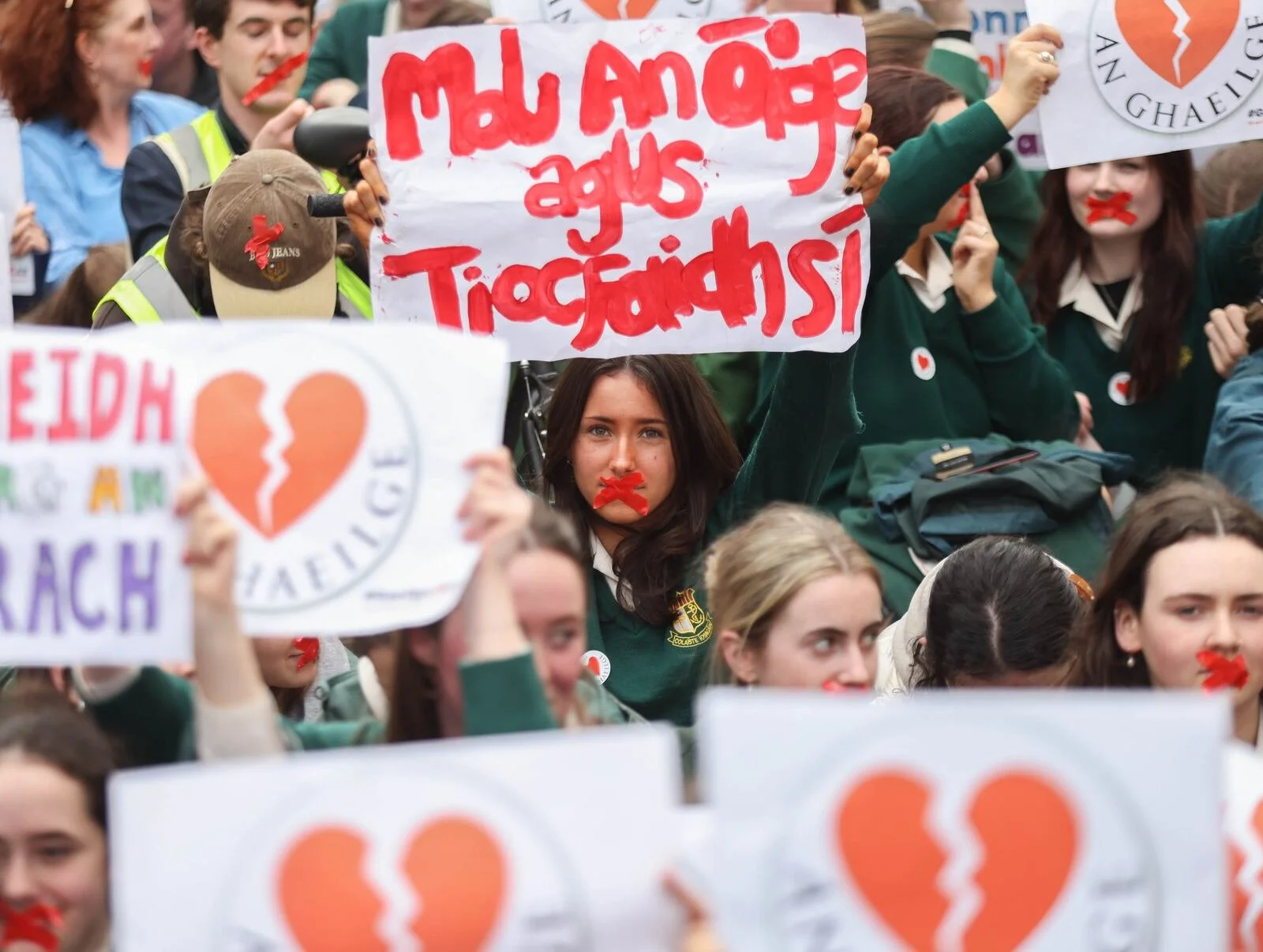
Irish culture, and by association the Irish language, has become fashionable, both in Ireland and internationally. Kneecap and CMAT sing lyrics in Irish to packed crowds across Europe and the US; Sally Rooney and Claire Keegan write novels that grapple with distinctly Irish themes; and Irish actors are winning major awards while openly discussing Irish history, identity, and politics in interviews. While it is not new for Irish writers, actors, and musicians to achieve global recognition (think James Joyce, Seamus Heaney, and Sinéad O’Connor), what feels new is the improved level of respect Irish artists now receive — and the fact that they are increasingly able to maintain a visible sense of Irishness while doing so.
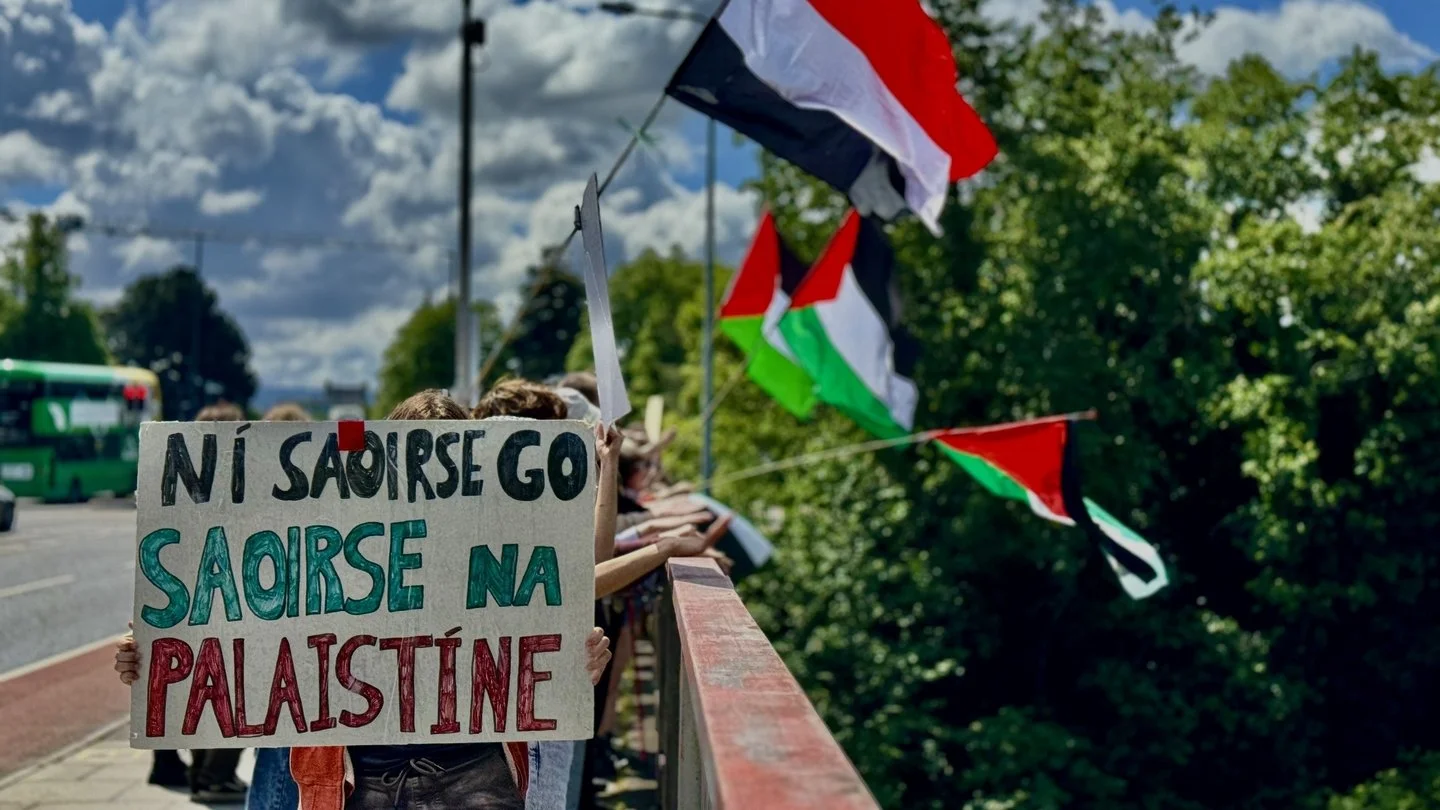
The privilege and power of having one’s voice respected in the Global North is not lost on the Irish people. For centuries, the Irish language and its speakers were oppressed under British colonial rule, forcing many to adapt or emigrate. Even after independence in the Republic, economic priorities have often outweighed efforts to conserve Irish. Traditional Irish-speaking communities remain among the hardest hit by inequality and the changes associated with an increasingly urban and globalised society. Today, the Irish language stands both as a pillar of Irish identity, which some work tirelessly to preserve, and as a symbol of solidarity: many Irish speakers connect their use of the language with broader struggles for justice, in particular in support of the people of Palestine.
This course is for beginners who want to explore both the basics of Irish and the culture that shapes it. You will learn everyday Irish for introductions, questions, and simple conversations, while also engaging with songs, texts, and contemporary issues tied to the language. The aim is not only to build the vocabulary and grammar needed to enjoy spoken Irish, but also to understand Irish in its wider cultural and historical context — helping students find meaningful opportunities to actually use the language and help keep it alive. The curriculum will be flexible and shaped in collaboration with participants, reflecting the needs and interests of the class.
Sample topics include:
Pronunciation and the sounds of the Irish alphabet
Greetings, introductions, and practical conversation
Discussions on revival, colonialism, and contemporary social issues
Practical vocabulary like numbers, dates and telling time
Insights into the differences between Irish as a native and learned language
Asking questions and expressing negation
Key verbs in the present tense (bí, téigh, faigh, etc.) an an chopail (is).
Nouns, articles, gender, and agreement
Songs, stories, and texts in Irish
About the tutor
The class will be delivered by Odhrán, who has spoken Irish since childhood, from Irish-language schooling and summer colleges to university-level study. He now incorporates Irish into his daily life through Raidió na Gaeltachta, Irish literature, and events in London like Seanchoíche as Gaeilge. Odhrán recently completed an MSc in Public Health, where he explored themes of colonialism, equality and the broader determinants of health and people’s lives. His teaching style is interactive, personal, and ambitious, encouraging students to engage actively while also providing extensive resources for independent learning. One-to-one sessions can be arranged for those wishing to deepen their study.
All our courses are priced according to a pay-what-you-can policy, find out more in our booking page. You can ask for a full refund after the first class.